
Going beyond what immediately “makes sense” and challenging mental models is a key activity for organizations that want to grow. But how can you do that? How can you embed the ability to explore new possibilities?
Today’s blog post is by Dr. Giovanni Siepe.
The Limits of Logic
When it comes to the Theory of Constraints, we often hear about “Logical Thinking Tools”. Let’s start with an important affirmation: Dr. Goldratt’s most significant innovation in organizational science can be found in the Thinking Processes. Many people refer to them as “logical tools”. There is a logic to them but NOT in a mathematical sense. The Thinking Processes are linguistic structures built on an emotionally-oriented logic of cause and effect.
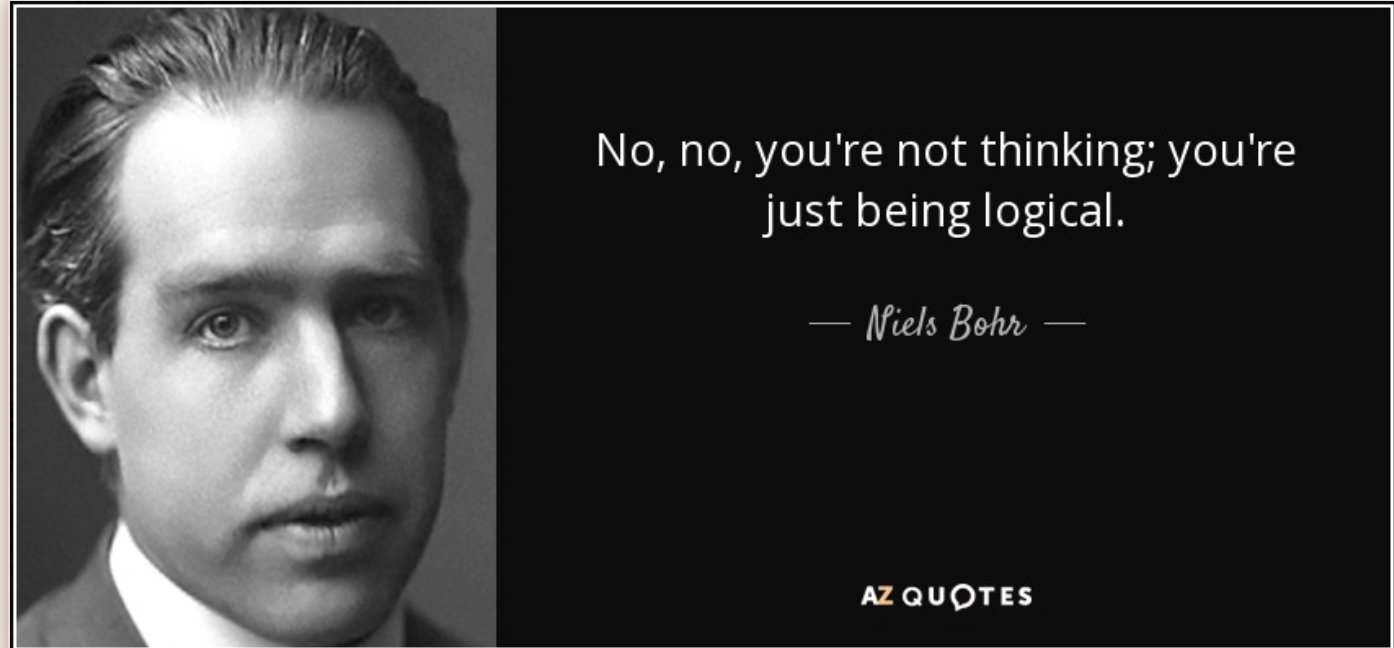
The Conflict Cloud: A Foundation
Among the Thinking Processes, the most fundamental is the Conflict Cloud. It’s built on five categories of speech:
- the two conflicting positions
- the two needs that underpin the positions
- the goal common to the two needs
- the assumptions that interconnect all the elements of the conflict
- The “Injections”–statements that invalidate certain assumptions to “evaporate” the conflict
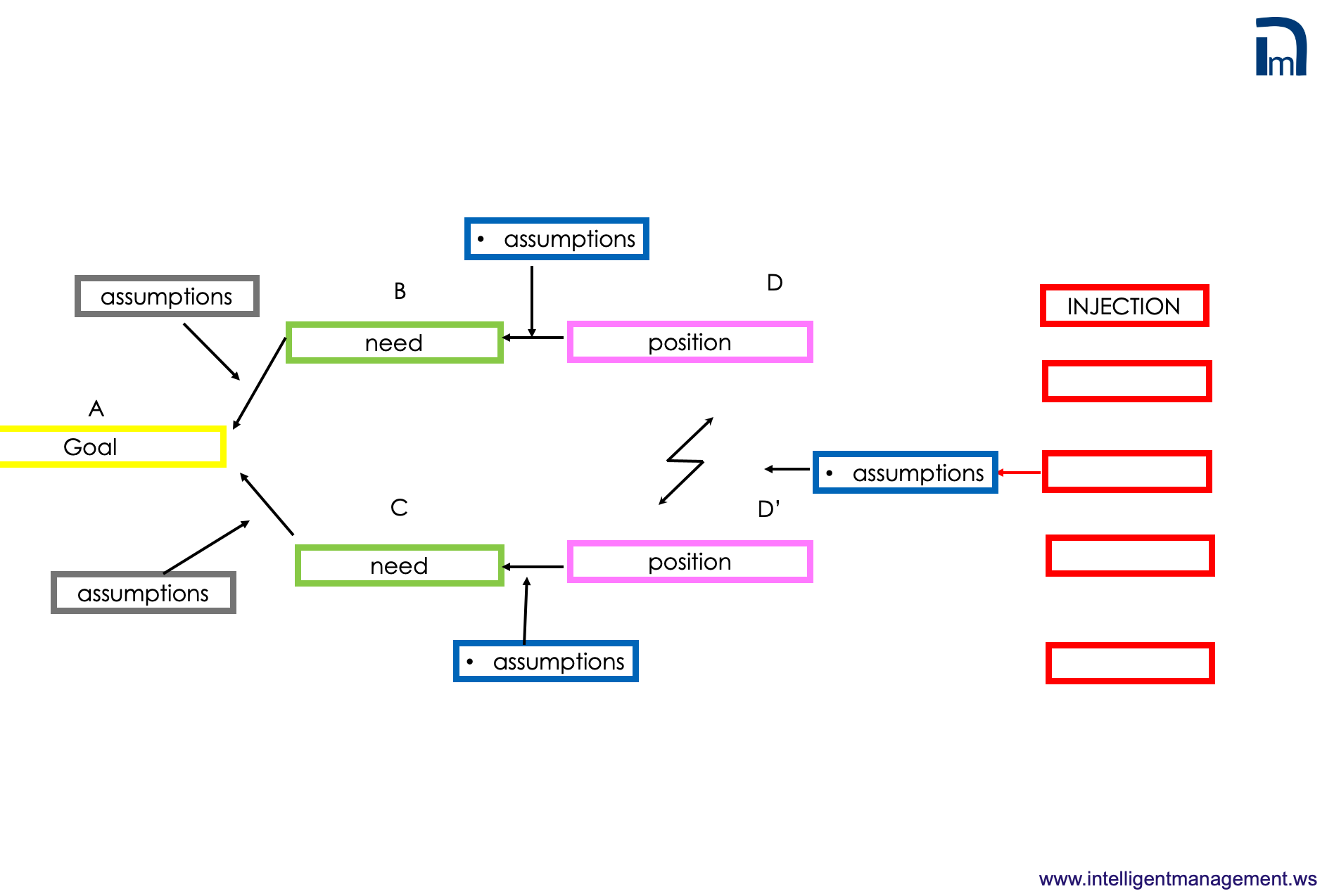
An example that is easy to understand due to the universal nature of the conflict can be found in Dr. Goldratt’s book “It’s Not Luck” where he first introduces the Thinking Processes. The conflict is called “Sharon’s Cloud”.
The assumptions in this framework represent conditions of sufficiency among the different categories of speech; they complete the cloud both logically and linguistically. However, the assumptions between D and D’ are different. They are not conditions of sufficiency. Instead, they represent limiting mental models—what at Intelligent Management we call the Cognitive Constraint—which we must always try to overcome to break through into a new solution.
What Exactly Is an Assumption?
So what exactly is an assumption? If we approached this from a perspective of mathematical logic, we might talk about assumptions as incorrect statements to discard in favor of a correct logic. Nothing could be more misleading!
The assumptions we make about the world help us to live. They form the fabric of our reality. Unfortunately, even some TOC practitioners speak of “flawed assumptions,” suggesting some people think correctly while others don’t. We prefer to use language in a more effective way: some assumptions are more solid, while others are weaker.
A Practical Example: The Shape of the Earth
Consider the assumption that the Earth is flat. This assumption allows us to live without vertigo or the unsettling feeling that, sooner or later, we might end up upside down. The assumption is extremely solid if we limit ourselves to our neighbourhood, city, or even our nation (provided it’s not too big).
However, this assumption weakens considerably when we embark on an overseas journey. Common sense suggests that the shortest route from New York to Moscow is a straight line across the Atlantic Ocean, heading west to east (based on the assumption that the earth is flat). Yet contrary to intuition, the actual shortest route follows a curved trajectory—first heading northeast, then southeast—following the geodesic connecting the two cities on the globe.
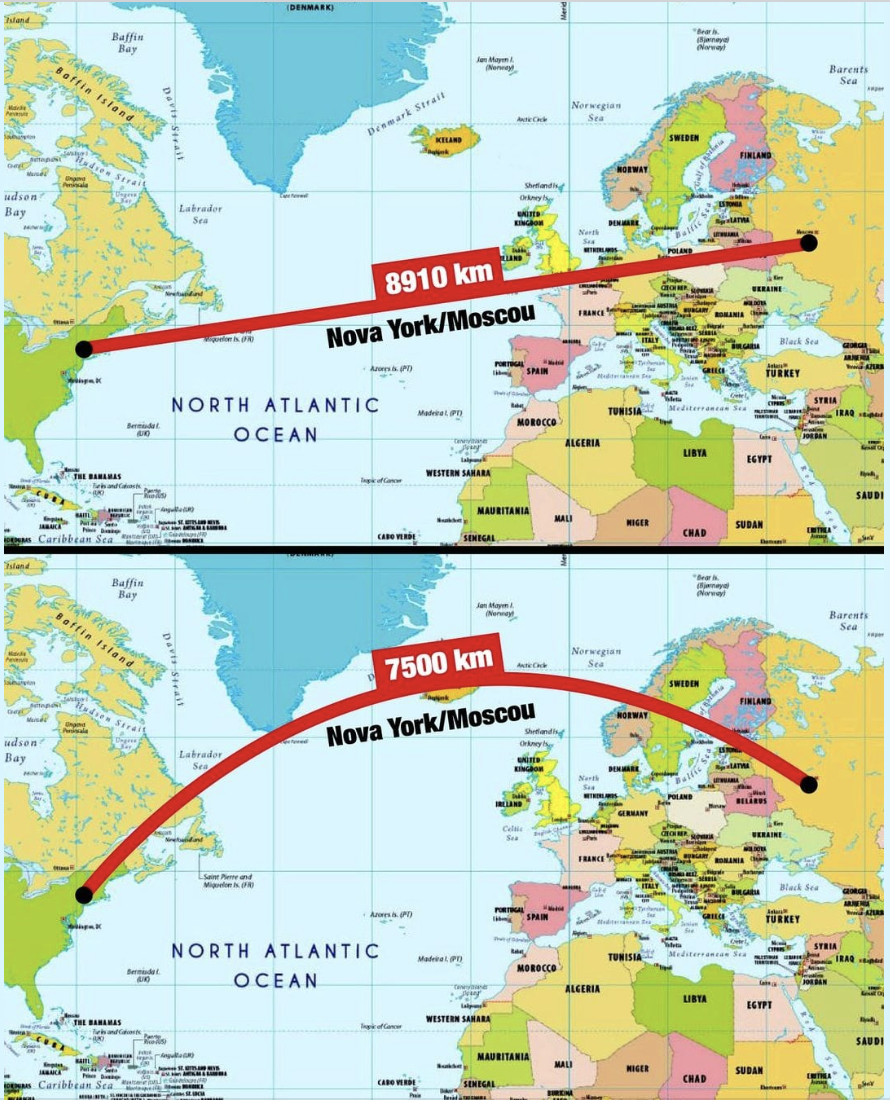
The assumption that the Earth is flat has a realm of validity. Like all assumptions, it must be validated within its specific context. If I’m comfortable in my neighbourhood, city, or country, I have no need to invalidate the assumption that the earth is flat. But if I want to venture out to sea and discover new worlds, I must challenge my limiting assumptions—my Cognitive Constraint—and invalidate them.
Why Organizations Need Explorers
If managing organizations operated under strict mathematical logic, there would always be one right solution while all others would be wrong. (Earth is a spheroid!) But organizations are complex systems—oriented networks of activities and conversations that are dominated by emotions. A solution that works “logically” for one organization may fail for another. The emotional context makes all the difference.
I’ll conclude with a question: Are we comfortable in our neighbourhood or city—our comfort zone—or do we feel like explorers, ready to venture out to sea?
This is what seeking and finding a breakthrough solution with the Conflict Cloud is all about.
At Intelligent Management , we’ve been helping organizations develop and implement breakthrough solutions for over 25 years. Contact us today to learn how we can help you create breakthrough solutions that take your business to a whole new level. Reach out to us at intelligentmanagement@sechel.ws or through our online form here: https://intelligentmanagement.ws/contact-us/
OUR BOOKS
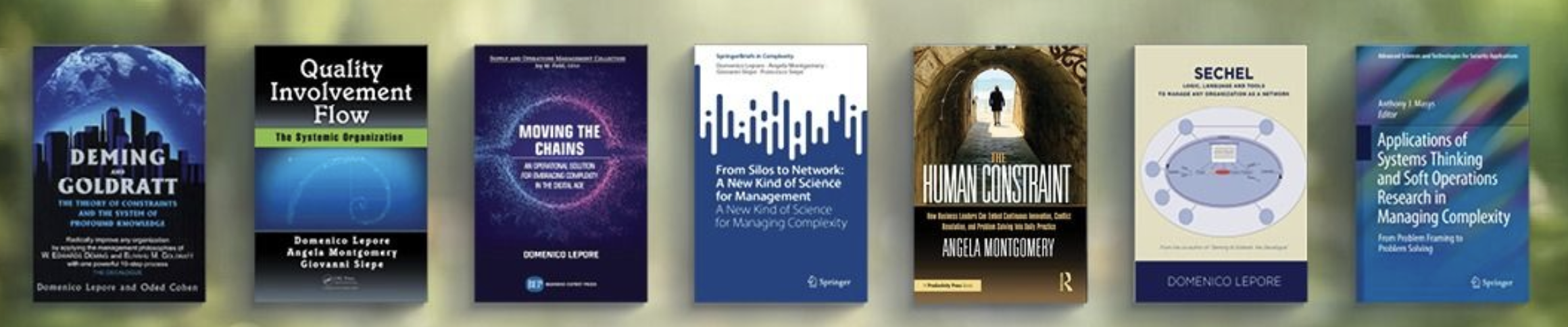
Intelligent Management works with decision makers with the authority and responsibility to make meaningful change to optimize your company for the digital age. We have helped dozens of organizations to adopt a systemic approach to manage complexity and radically improve performance and growth for over 25 years through our Decalogue management methodology. The Network of Projects organization design we developed is supported by our Ess3ntial software for multi-project finite scheduling based on the Critical Chain algorithm.
See our latest books: The Human Constraint from Routledge; From Silos to Networks: A New Kind of Science for Management from Springer; Moving the Chains: An Operational Solution for Embracing Complexity in the Digital Age by our Founder Dr. Domenico Lepore, and ‘Quality, Involvement, Flow: The Systemic Organization’ from CRC Press, New York by Dr. Domenico Lepore, Dr. Angela Montgomery and Dr. Giovanni Siepe.





Leave a Reply