
Image from yasin-aribuga-CjatVyh9wWA-unsplash
The Theory of Constraints became famous with ‘The Goal’ but its deeper nature was revealed later.
Most people who have heard of the Theory of Constraints (TOC) know it through The Goal, Dr. Eliyahu Goldratt’s 1984 business novel that presented a management revolution inside a page-turning, factory-based story where one seemingly unsolvable problem follows fast on another. The book introduces the idea that every system/organization has at least one “bottleneck” that limits its overall performance. By focusing on the bottleneck and using the right measurements regarding throughput, you can improve the whole system.
The planetary success of The Goal was both a blessing and a curse. Only about 1% of those who read The Goal go on to read What Is This Thing Called the Theory of Constraints (1990) or The Haystack Syndrome (1990). Without reading those books, people will lack an understanding of what Goldratt was building toward. The Goal is the tip of the iceberg.
The Hard Core of the Theory of Constraints
The majority of readers of The Goal would be very surprised by Dr. Goldratt’s assertion years later that the hard core of TOC is not the practical applications, i.e. the proven solutions TOC is famous for: Drum-Buffer-Rope, Critical Chain Project Management, New Product Development and the replenishment model, all of which are genuinely powerful. The hard core of TOC is in fact found in what he called the Thinking Processes. He made this statement on page 95 of his 1994 business novel It’s Not Luck that reads like a sequel to The Goal.
So what happened in between The Goal and It’s Not Luck? Dr. Goldratt secluded himself to work on something new because he realized that it was not sufficient for people to learn the “mechanics” of identifying a physical constraint and following the five focusing steps. This would not be a lasting solution because there were situations of blockage that were “non-physical”. It was therefore necessary for people to develop the thinking ability to continuously solve situations of blockage with breakthrough solutions. In It’s Not Luck he reveals for the first time what he called the Thinking Processes. In other words, he unveils the heart of the Theory of Constraints by offering a method for thinking, the very same method he used to develop the unprecedented solutions of Drum-Buffer-Rope, Critical Chain Project Management, New Product Development and the replenishment model. These formidable solutions are emanations of a way of thinking and of a world view where it is always possible to take a situation of blockage to a different plane where the conflict no longer exists and a win-win solution can be found.
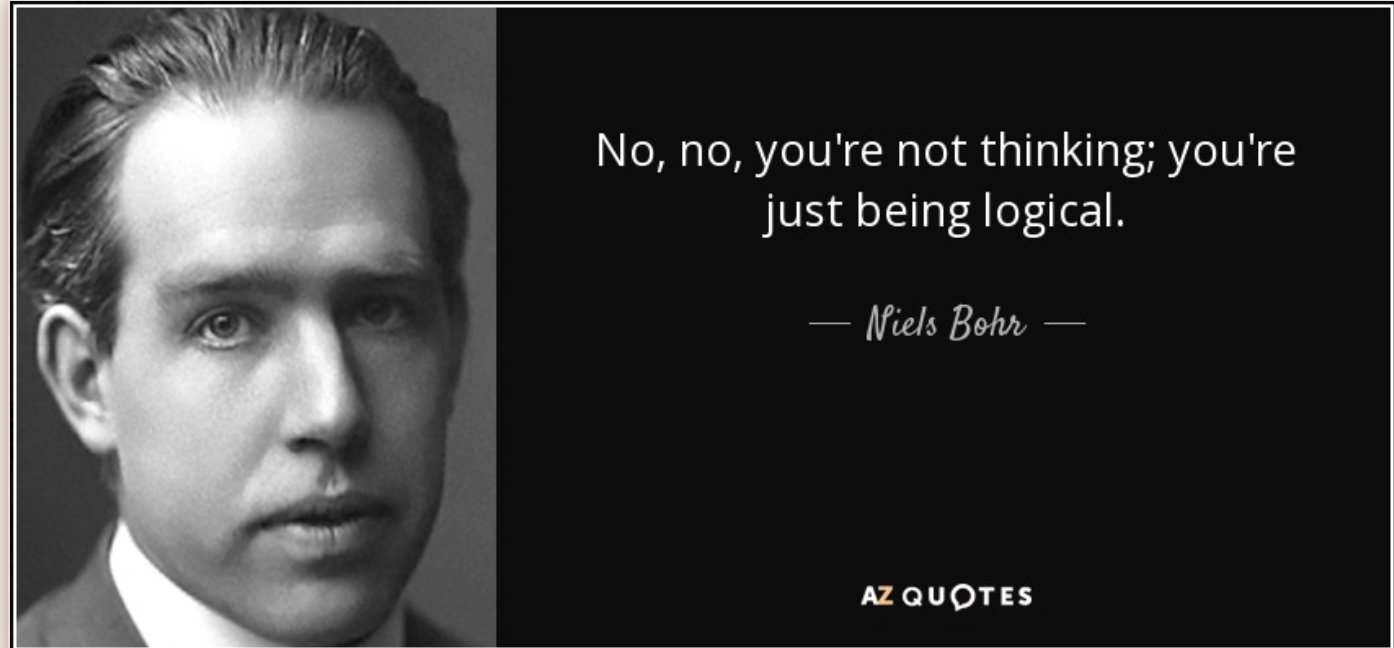
Beyond Logic
We had the privilege of learning and testing the Thinking Processes from when they were first introduced in a multiplicity of environments. The Thinking Processes were never intended to operate at the level of conventional rational analysis or mathematical reasoning. For this reason it is misleading to refer to them, as some authors do, as “logical tools”. Anyone who learns them as logical tools misses out on their profound effectiveness. They were built to harness something more fundamental than mathematical logic and that is the real material that drives human decision-making: emotion.
Dr. Goldratt understood that the most sophisticated operational algorithm is useless if the people who must implement it don’t believe in it, fear the change it demands, or are locked in a conflict they cannot name. As we have discovered in our thirty years of sharing and working with them, the Thinking Processes offer a linguistic framework to enable the systematic development of breakthrough solutions. Once a solution is identified, they offer a thorough and comprehensive way of managing human emotions so that the energy of those emotions is directed towards achieving the goal. By guiding people to surface and challenge their assumptions and mental models regarding a situation and identifying the related fears and desires that drive us as humans, they provide a method for navigating that emotional terrain, not bypassing it or pretending it doesn’t exist, but working through it systematically.
Building long-term success in a world of complexity
The proven solutions TOC is famous for, Drum-Buffer-Rope, Critical Chain Project Management, New Product Development and the replenishment model are most certainly effective. However, sustainable organizational success comes from something deeper: metabolizing the thinking approach and world view that produced those solutions in the first place, not just implementing the solutions themselves. This is because we live in age that is defined by complexity; we are immersed in a complex web of interdependencies where linear, siloed thinking leads to under performance. What is required is a systemic, unifying approach that overcomes unnecessary fragmentation. Understanding a constraint as a strategic resource is a foundational step in managing complexity.
Three decades of introducing a systemic, Deming and TOC methodology into such disparate sectors as software houses and metal foundries to name a few, has made something very clear to us: the Thinking Processes can embed the foundational constraint-focused approach to complexity to virtually every field of human endeavour, from schools, to hospitals, professional services, supply chains, government agencies and beyond. The approach doesn’t “belong” to manufacturing. It belongs to any system where clarity of purpose, identification of a strategic constraint, and intelligent subordination of the whole to the constraint can unlock disproportionate results.
The Theory of Constraints: A Bold Choice, Not for the Faint-Hearted
It’s important to say this plainly: TOC is not for the faint-hearted. It offers no gimmicks and promises no easy wins. Alongside Deming’s Theory of Profound Knowledge, TOC is a management philosophy that demands intellectual honesty, constancy of purpose, and a genuine willingness to question assumptions, including the most comfortable ones.
TOC is not a toolkit. However, an organization that metabolizes the Thinking Processes and uses them regularly to address day-to-day issues and high level strategy will find they have developed something that compounds over time. They acquire a method for continuous innovation. That is a rarer and more durable competitive advantage than any single method can provide. When combined with Deming’s foundational understanding of an organization as a system, it becomes a formula for lasting success.
Learn the Theory of Constraints with us
At Intelligent Management , we’ve been helping organizations develop and implement breakthrough solutions with the Theory of Constraints for over 25 years. Contact us today to learn how we can help you create breakthrough solutions that take your business to a whole new level. Reach out to us at intelligentmanagement@sechel.ws or through our online form here: https://intelligentmanagement.ws/contact-us/
OUR BOOKS
Intelligent Management works with decision makers with the authority and responsibility to make meaningful change to optimize your company for the digital age. We have helped dozens of organizations to adopt a systemic approach to manage complexity and radically improve performance and growth for over 25 years through our Decalogue management methodology. The Network of Projects organization design we developed is supported by our Ess3ntial software for multi-project finite scheduling based on the Critical Chain algorithm.
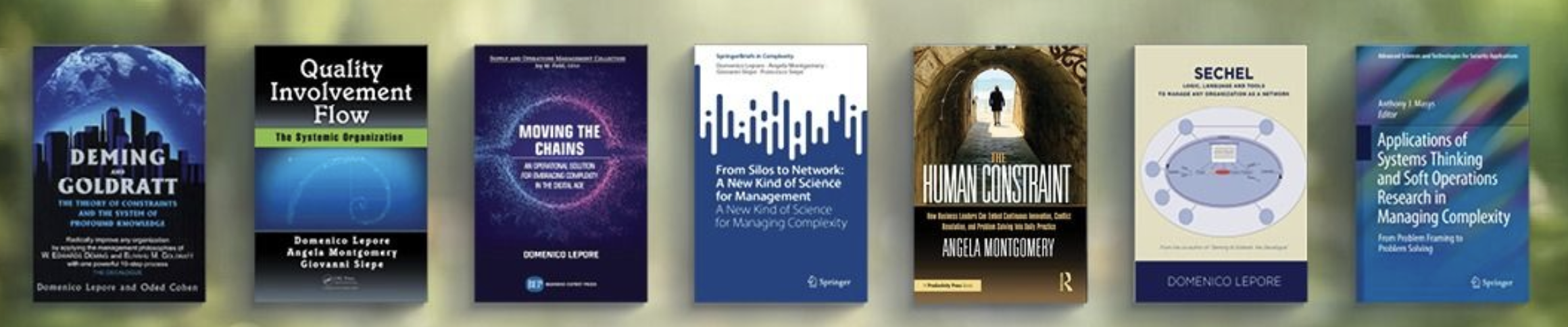
See our latest books: The Human Constraint from Routledge; From Silos to Networks: A New Kind of Science for Management from Springer; Moving the Chains: An Operational Solution for Embracing Complexity in the Digital Age by our Founder Dr. Domenico Lepore, and ‘Quality, Involvement, Flow: The Systemic Organization’ from CRC Press, New York by Dr. Domenico Lepore, Dr. Angela Montgomery and Dr. Giovanni Siepe.




Leave a Reply