
There is a leadership crisis underpinning a multiplicity of problems. It is due to a lack of understanding of complexity and how organizations must be designed and led for the 21st century.
There is a quiet crisis in the corner offices of many organizations: leadership. Leaders are working harder than ever, managing dashboards, attending stand-ups, driving quarterly targets, and yet growth remains elusive, fires keep breaking out, and the same problems resurface in new disguises. The instinct is to look for better tactics: a new incentive structure, a productivity framework, a leadership training program. But the crisis is not tactical, it is epistemological.
The world has changed. Organizations have not.
Most companies are still structured and led according to assumptions formed in the industrial age: divide the work into functions, measure each function independently, reward individual performance, and optimize every part. It is a logic that made sense when the challenges were simple and the environment was stable. Neither condition applies today.
We live and work in a world of complexity, interdependence, and accelerating change. In this world, the old model of leadership–command, control, departmental accountability, local optimization–does not just underperform. It actively causes harm. It generates the very chaos leaders are desperately trying to manage.
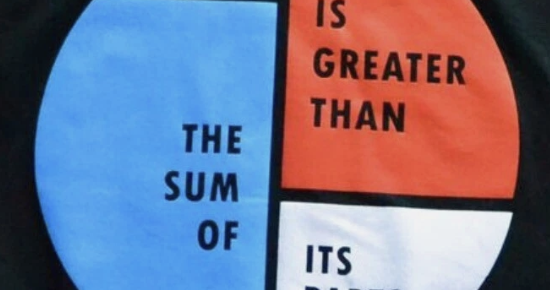
The Organization Is a System
The starting point for a new kind of leadership is a deceptively simple insight: an organization is not a collection of departments. It is a system, and that means a network of interdependent components that work together to achieve a common goal.
This is not a metaphor. It is a precise scientific description. And it has profound implications for how organizations must be led. You cannot command a network, you can influence and orient it towards the goal.
When you understand your organization as a system, you immediately see that local optimization is the enemy of global performance. When every department is optimized for its own metrics—sales, operations, finance, HR, then the organization as a whole is being suboptimized. Each function pulls in slightly different directions. Handoffs break down. Resources pile up in some areas and starve in others. Conflict becomes structural, not personal.
Dr. W. Edwards Deming, one of the most important management thinkers of the twentieth century, was insistent on this point. He argued that most organizational problems, perhaps 94% , are the result of the system, not the individuals within it. Blaming people for problems that are built into the design of the organization is not just unfair. It is a guarantee that nothing will change.
Finding the Leverage Point
If the organization is a system, then it follows scientifically that the system has a constraint — a single point that limits overall throughput and performance more than any other. This is the central insight of Dr. Eliyahu Goldratt’s Theory of Constraints.
The constraint is not a failure. It is a feature of any functioning system. Every system has one. It dictates the pace at which the entire system generates throughput. The question is whether leadership knows how to choose it strategically and manage it deliberately, or whether it remains invisible, driving dysfunction that no one can adequately explain. Identifying a strategic constraint as a leverage point requires systemic thinking — the ability to trace cause and effect through the interconnections of the whole organization, not just the parts.
When leaders choose a strategic constraint and focus the organization’s resources and energy on exploiting and elevating it, something remarkable happens: performance improves across the system, not just in one area. This is leverage. This is the difference between working harder and working smarter at the level of the whole.
The Decalogue: Where Deming and Goldratt Meet
At Intelligent Management, we have spent nearly thirty years developing and refining a methodology that brings Deming and Goldratt together into a single cohesive framework: The Decalogue.
The Decalogue is not a synthesis of two theories. It is the recognition that both Deming and Goldratt were working toward the same thing, that is a scientifically rigorous, humanistic approach to managing organizations as living, interconnected systems. Deming’s System of Profound Knowledge provides the philosophical and psychological foundation: understanding variation, understanding systems, developing knowledge, and managing people with intelligence and respect. Goldratt’s Theory of Constraints provides the practical operational architecture: identifying/choosing constraints, subordinating everything else to the constraint, and driving flow through the system.
Together, they offer something that neither provides alone: a complete approach to organizational transformation. Not better performance as an end in itself, but a paradigm shift in how an organization thinks, decides, and acts.
What New Leadership Actually Looks Like
Leadership in a systemic organization looks different from conventional management. The role of the leader is not to have all the answers, control all the decisions, or personally drive every initiative. The role is to influence and orient the system — to maintain focus on the constraint, protect flow, reduce unnecessary variation, and create the conditions in which people can contribute their best thinking.
This requires a different relationship with data. Most organizations are drowning in metrics that measure local performance without illuminating systemic health. A new kind of leader learns to ask different questions: Where is flow breaking down? Where is variation creating unpredictability? What is the true constraint limiting our throughput today?
It also requires a different relationship with people. Deming was adamant that fear of being blamed, punished, or humiliated is one of the greatest destroyers of organizational performance. Leaders who want to build high-functioning systems must create psychological safety as a structural condition, not a cultural nicety.
And it requires a different relationship with time. Short-term thinking and systemic thinking are in fundamental tension. Constraint management, variation reduction, and knowledge transfer are investments that pay off over time, often invisibly at first. Leaders who cannot hold a longer view will always default to the quick fix, and the quick fix always comes at the expense of the system.
The Leadership Bottleneck
Here is the uncomfortable truth that most leadership development programs avoid: in many organizations, leadership itself is a botlteneck.
Not because leaders are incompetent, but because the model of leadership they have inherited is incompatible with the complexity of the organizations they are trying to lead. A hierarchical model that concentrates decision-making at the top creates an inevitable bottleneck. Every significant decision must pass through a small number of people. Those people become overloaded, information distorts as it travels up and down the chain, and the organization loses the responsiveness it needs to survive in a fast-moving environment.
Breaking the leadership bottleneck does not mean abandoning accountability or distributing authority indiscriminately. It means redesigning the organization so that people at every level understand the system, understand the constraint, and know how to make decisions that support flow rather than disrupt it. It means developing the thinking capacity of the organization as a whole, not just the people at the top.
A New Personalized Program: Thinking Skills for Systemic Leadership
The thinking capacity required to manage a system and orient the network is not innate. It requires skills that can be learned. How can you influence a network? By:
–making decisions based on understanding cause-and-effect relationships
-managing conflicts that interrupt flow
–co-developing systemic solutions
–anticipating negative implications of decisions
–building systemic strategies and roll out plans
–scheduling projects of tasks at finite capacity
These abilities are all gained by learning the systemic Thinking Processes from the Theory of Constraints. Our work at Intelligent Management with decision-makers at dozens of organizations over the years has always included transferring the method to develop these abilities. We now have a new program that we call the ‘Sechel Program‘ that offers a one-on-one introduction to these thinking skills for individuals who wish to learn to make decisions with confidence and exercise leadership in a complex environment. A limited number of places are available.
A New Kind of Science for Management
The challenges facing 21st century leaders are real, and they are not going away. Complexity, interdependence, volatility, the pace of change are permanent features of the environment, not temporary disruptions.
The organizations that will thrive are those whose leaders understand them as systems, manage them with systemic intelligence and rigour, and invest in the knowledge and thinking capacity that turns complexity from a threat into a competitive advantage. It is interesting to see that the Theory of Constraints has been chosen for such complex projects as the leadership of a State in the USA and organization of resources in the FAA.
This is not a new idea. Deming and Goldratt laid the foundations more than four decades ago. What is new is the urgency — and the availability of a methodology capable of putting these ideas into practice.
The Decalogue is that methodology. And the leaders willing to embrace it are the ones building organizations fit for the century ahead.
Photo by Priscilla Du Preez 🇨🇦 on Unsplash
Intelligent Management has been helping CEOs, founders, business owners and executives learn to theink systemically since 1996. achieve sustainable organizational growth since 1996. To learn more about our new one-on-one program for systmeic thinking and decision-making, visit our new Sechel Program.





Leave a Reply