The most expensive management mistake isn’t a bad hire or a failed product launch. It’s an assumption so embedded in how we run organizations that most leaders never think to question it.
Every metric is green. So why is the business struggling?
This is not a rhetorical question. It happens constantly, in companies of every size and industry. The numbers look right. The departments are hitting their targets. The growth plan is being executed. And yet, something isn’t working. Revenue is flat. Customers are quietly leaving. The leadership team is exhausted from optimizing things that refuse to stay optimized.
The dashboard isn’t malfunctioning. It’s doing exactly what it was designed to do. That’s the problem.
We Built the Wrong Measurement Instrument
When you design a measurement system around departments, you will get very accurate information about departments. What you will not get is any meaningful information about your organization.
Those are not the same thing.
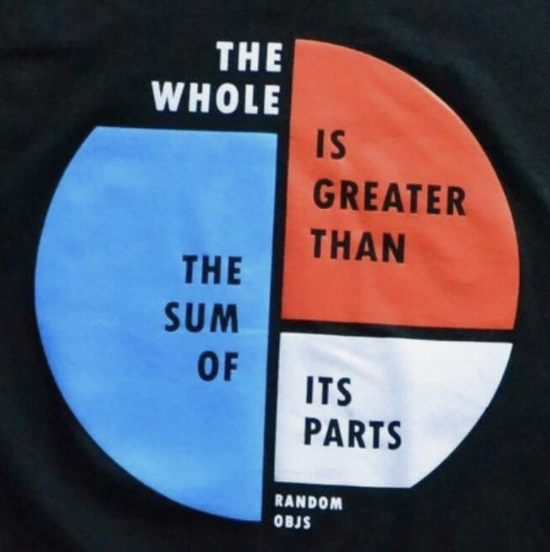
An organization is not a collection of departments any more than a living body is a collection of organs that happen to share a zip code. It is a system, a network of interdependencies where the interactions between parts produce outcomes that no single part controls. New properties emerge from those interactions. That is what complexity means, and it is why optimizing each piece independently does not produce a better whole. It often produces a worse one.
Dr. Deming understood this seventy years ago. The system has to be designed around the speed at which value reaches the customer. Everything else, every internal metric, every departmental target, every beautifully formatted KPI report is, at best, a proxy. At worst, it is theatre. And most organizations have built magnificent theatres.
Production hits its target. Finance hits its target. Sales hits its target. The customer is nowhere in any of it.
The Spreadsheet Is Not a Management Tool
Here is a harder truth: the instrument most organizations use to run themselves, the spreadsheet, is structurally incapable of representing what an organization actually is.
Excel is a matrix. Rows, columns, discrete cells. It is excellent at what it does. But an organization is a network of feedback loops, delays, constraints, and non-linear relationships. When you force that reality into a matrix, you don’t simplify it, you distort it. You create the illusion of clarity while the actual system continues to behave in ways the spreadsheet cannot predict and will never explain.
This is not an argument against data. It is an argument against mistaking the map for the territory. The map is flat. The territory has depth.
What Conventional Consulting and Business Schools Sold You
There is something we wrote years ago that we have never walked back:
We have been dismayed over the years by what much of the consulting world has offered. This simply means: we sell only what a customer is currently capable of conceiving.
The standard consulting model does not expand your thinking. It reflects it back to you, polished. It gives you a slightly better version of the assumptions you already hold: the same linear model, the same departmental lens, the same fragmented analysis, dressed up in a thicker report with more confident language.
Business schools prepared the ground for this. Modular courses, departmental curricula, case studies that analyze slices of organizations in isolation. The graduates these programs produce are often brilliant analyzers of parts. Very few of them have ever been given a framework for understanding a whole.
And then there is the delivery model: fat folders, long recommendations, billable hours. Here is what no one in that model will tell you directly: a solution cannot be installed. No matter how rigorous the analysis or how correct the recommendations, change is a process for the people inside it. If the cognitive dimension is not addressed, the report sits on the shelf. The shelf becomes the ROI.
Organizational Science Is Different
At Intelligent Management, we made a choice early on not to be consultants in the conventional sense. We are organizational scientists.
The distinction is not cosmetic. A consultant tells you what to do. A scientist helps you understand what is actually happening so that you can see things you could not see before, and make decisions from that new vantage point.
We work directly with decision makers and staff, hands-on, through a continuous interplay of knowledge and implementation. The Decalogue Method, our ten-step methodology integrating the Theory of Constraints with Deming’s System of Profound Knowledge, gives organizations a framework for seeing themselves as systems: identifying a strategic constraint to radically improve performance, aligning around the flow of value to the customer, and building the kind of coherence that no departmental optimization program ever produces.
The consulting world sells you a mirror. We hand you a different set of lenses. That is not a small distinction. What you are able to conceive determines what you are able to build.
The Question Worth Asking
If your metrics are green and your business is not growing the way it should, stop asking what each department needs to do better. Ask instead: what is the design of this system, and is it designed to produce what we actually want?
Most organizations have never asked that question seriously. They have optimized inside a design they inherited, assumed was correct, and never examined. The frustration they feel is not a sign of failure. It is a signal. The system is working exactly as designed. The design is the problem.
Changing the design requires seeing the organization as a whole: its constraints, its interdependencies, its actual relationship to the customer. That kind of seeing is a learnable skill. It is also, in our experience, the single highest-leverage thing a leadership team can develop.
Let’s Have a Different Conversation
If you recognized your organization somewhere in this post, the green metrics, the exhausted optimizing, the growth plan that keeps not quite working, we’d like to talk.
Not a pitch. A diagnostic conversation about how your organization functions as a system, where your real constraint lives, and what it would take to address it to grow exponentially.
We work with CEOs, founders, and owners, mostly of companies with 25 to 500 employees across many sectors, including professional services, manufacturing, software, engineering, healthcare, and construction. If that is you, and you are ready to look at the whole instead of the parts, the conversation starts here.
Start the conversation with us at Intelligent Management
Intelligent Management applies organizational science — the Decalogue Method — to help growing companies perform as systems, not collections of departments.
At Intelligent Management , we’ve been helping organizations develop and implement breakthrough solutions with the Theory of Constraints for over 25 years. Contact us today to learn how we can help you create breakthrough solutions that take your business to a whole new level. Reach out to us at intelligentmanagement@sechel.ws or through our online form here: https://intelligentmanagement.ws/contact-us/
OUR BOOKS
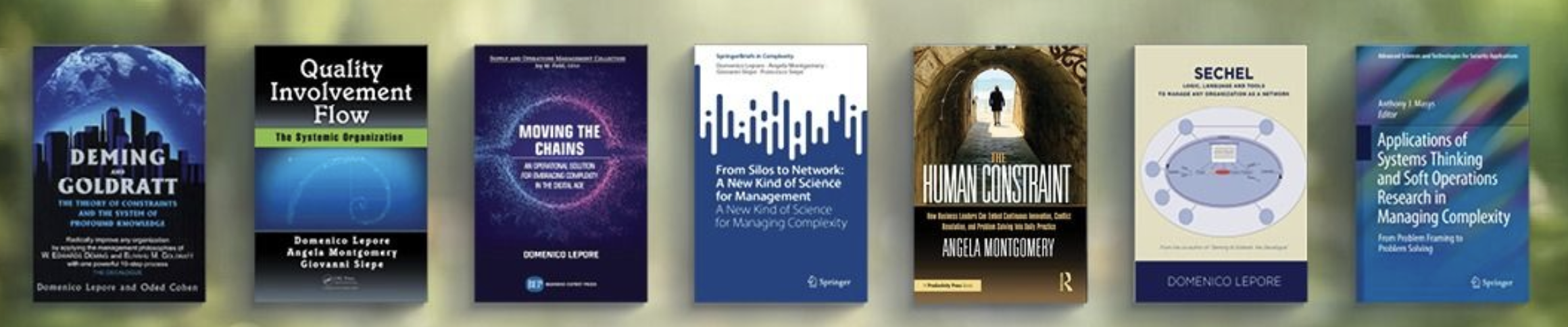
Intelligent Management works with decision makers with the authority and responsibility to make meaningful change to optimize your company for the digital age. We have helped dozens of organizations to adopt a systemic approach to manage complexity and radically improve performance and growth for over 25 years through our Decalogue management methodology. The Network of Projects organization design we developed is supported by our Ess3ntial software for multi-project finite scheduling based on the Critical Chain algorithm.
Intelligent Management applies organizational science — the Decalogue Method — to help growing companies perform as systems, not collections of departments.





Leave a Reply