Sam glanced at Nick before speaking. “Yes, but you are an industry, you are part of a supply chain, it’s a little different…”
Jenkins raised a hand like a stop sign. “They don’t give a damn about serving the customer. They’ve been trained for years to live with that trading instinct. Buy low, hang on to the stuff until you can sell high. Day in, day out. They get a huge kick out of that, and they’ve always been rewarded by the boss for it. They think they’re, who was that guy? The Gordon Gekkos of metal.”
In Chapter 12, Sam is both shocked and dismayed to hear that an industrial company like Maidenhead Metals has always adopted a traders’ mentality. In otherwords, they buy and hold stock not on the basis of what they need to service their customers, but based on buying at a low price and selling at a higher price. They ignore the fact that they are part of a supply chain and stock inventory purely on the basis of what they think will make them the most money.
This mental model pays no attention to the fact that they have immobilized cash in unnecessary inventory and causes artificial delays in the lead time to the customer. It is far from being a win-win solution.
In order to break free of this mental model, we can capture the situation at Maidenhead in the form of a conflict cloud.
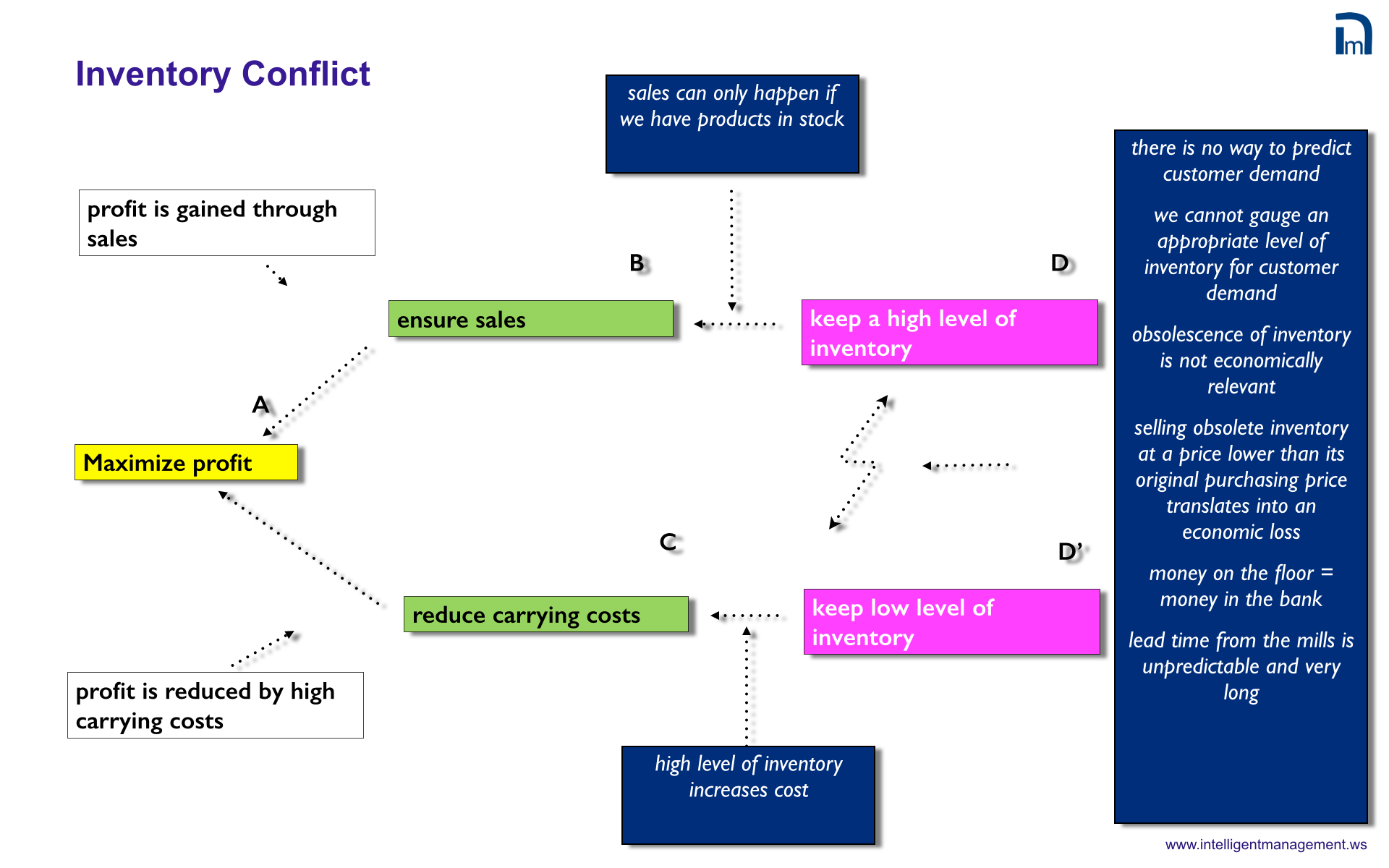
There are two conflicts we can verbalize here. One is to do with how much inventory it is best to keep, a high level of a low level. Keeping a high level protects the need to ensure sales, whereas keeping a low level protects the need to reduce carrying costs. The only way to break free from this conflict is to surface the assumptions (limiting beliefs) between D and D’and invalidate them. This will lay the groundwork for a breakthrough solution.
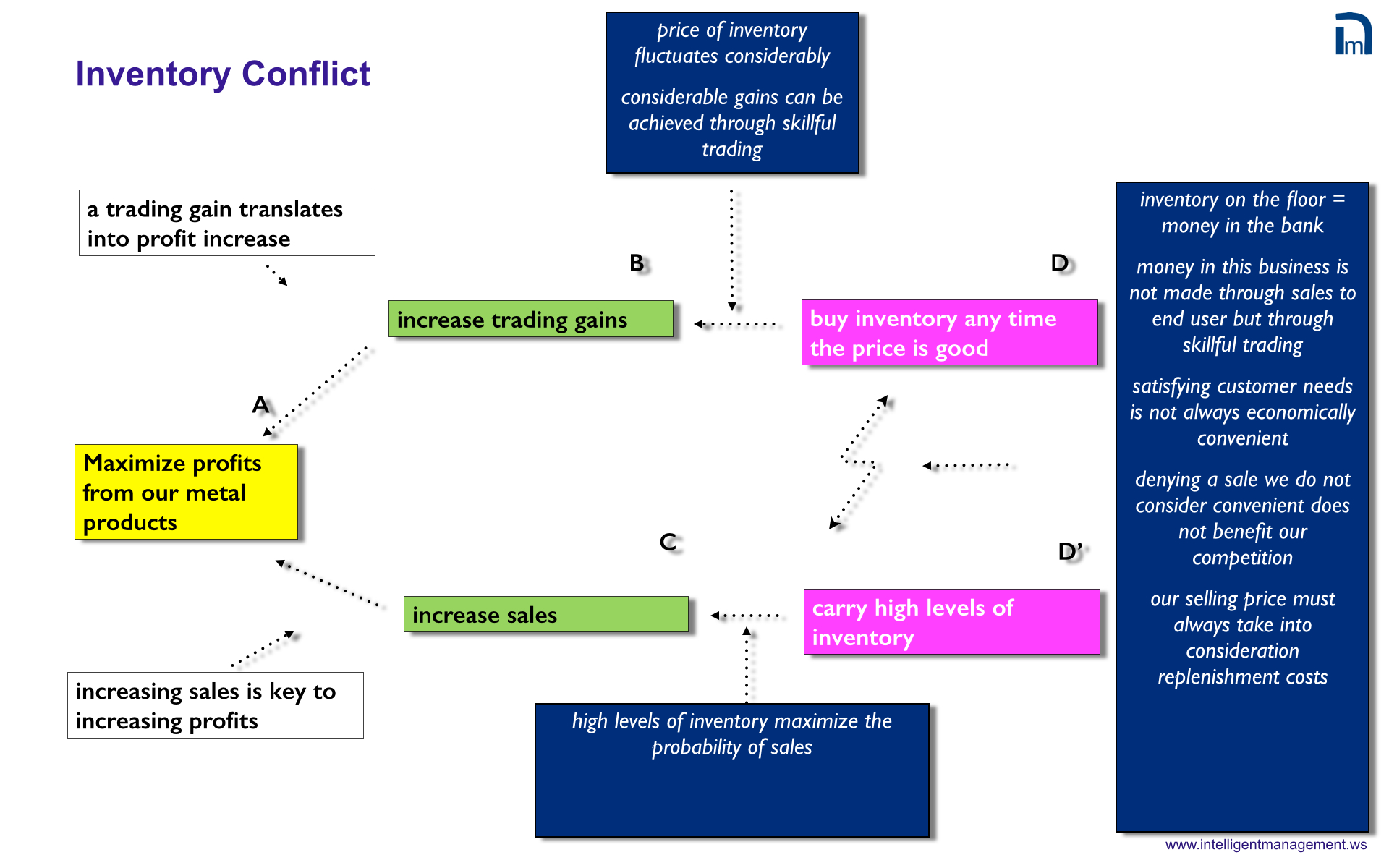
The second conflict is connected with buying inventory whenever the price is good, regardless of what is needed for production. Buying when the price is good protects the need to increase trading gains whereas carrying high levels of inventory protects the need to increase sales. As with the previous example, the only way to break free from this conflict is to surface the assumptions (limiting beliefs) between D and D’and invalidate them. This will lay the groundwork for a breakthrough solution.