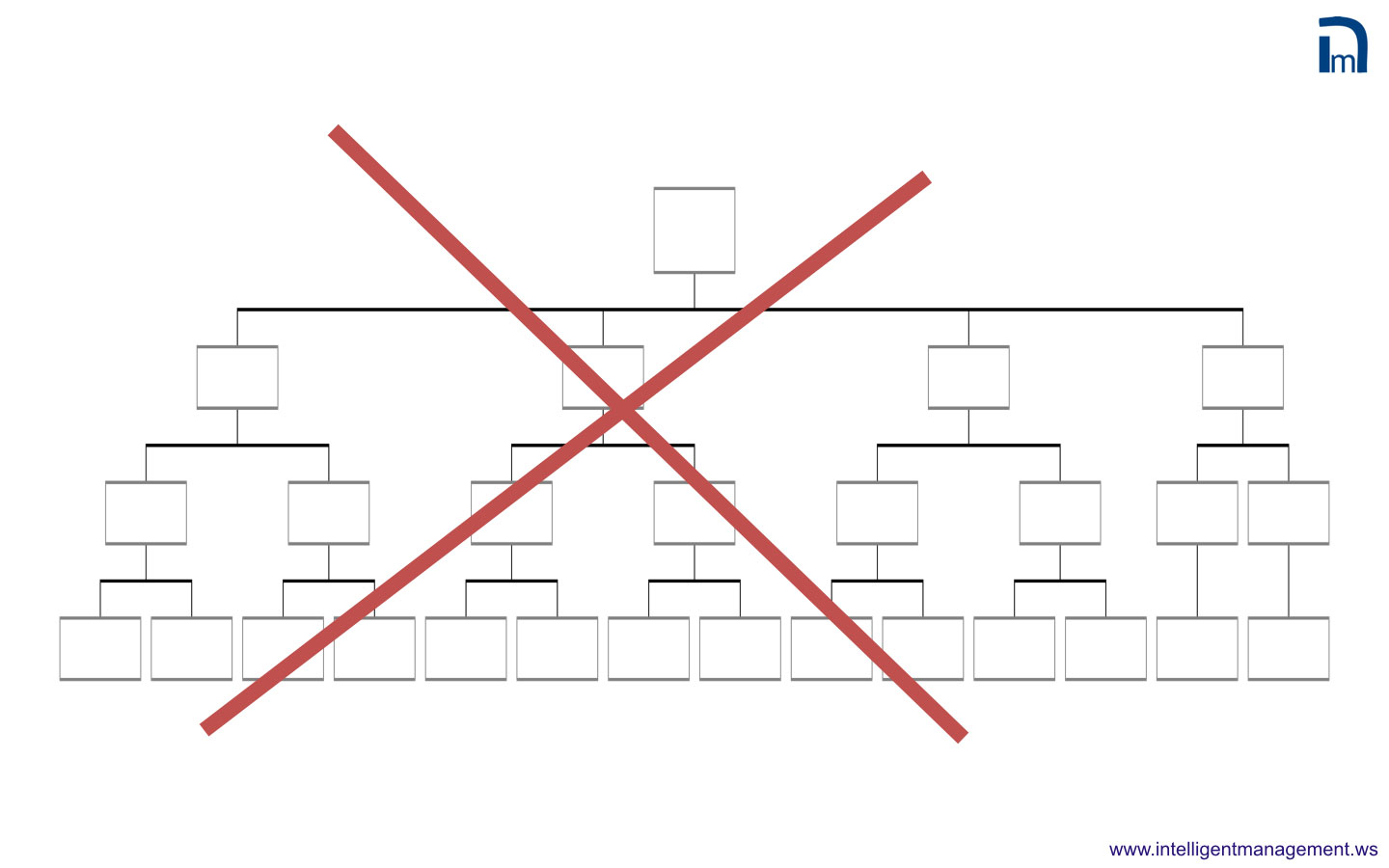
“Everything we do is a process. THAT’s what organizations are made up of, and we have to manage the flow of those processes, and continuously, relentlessly improve them. Every day we will apply a rigorous, logic-based thinking process to the enhancements of our operating systems, from governance right down to the shop floor. The whole thing.”
“Everything?”
“Because everything is interconnected.”
She looked at the mess on the board, gradually absorbing it all. Everything is interconnected, he had said. Somewhere on that board was a different kind of world, where people worked, interacted and communicated in a different way from before – he had transformed a pyramid into a free flow. From bondage to freedom. From slavery to cooperation. But her head was beginning to ache.
In Chapter 1, Nick draws images on the whiteboard in an effort to explain to May
about how organizations need to shift from a traditional hierarchical style of management to a systemic approach. He draws a flow chart to illustrate this new kind of organizational
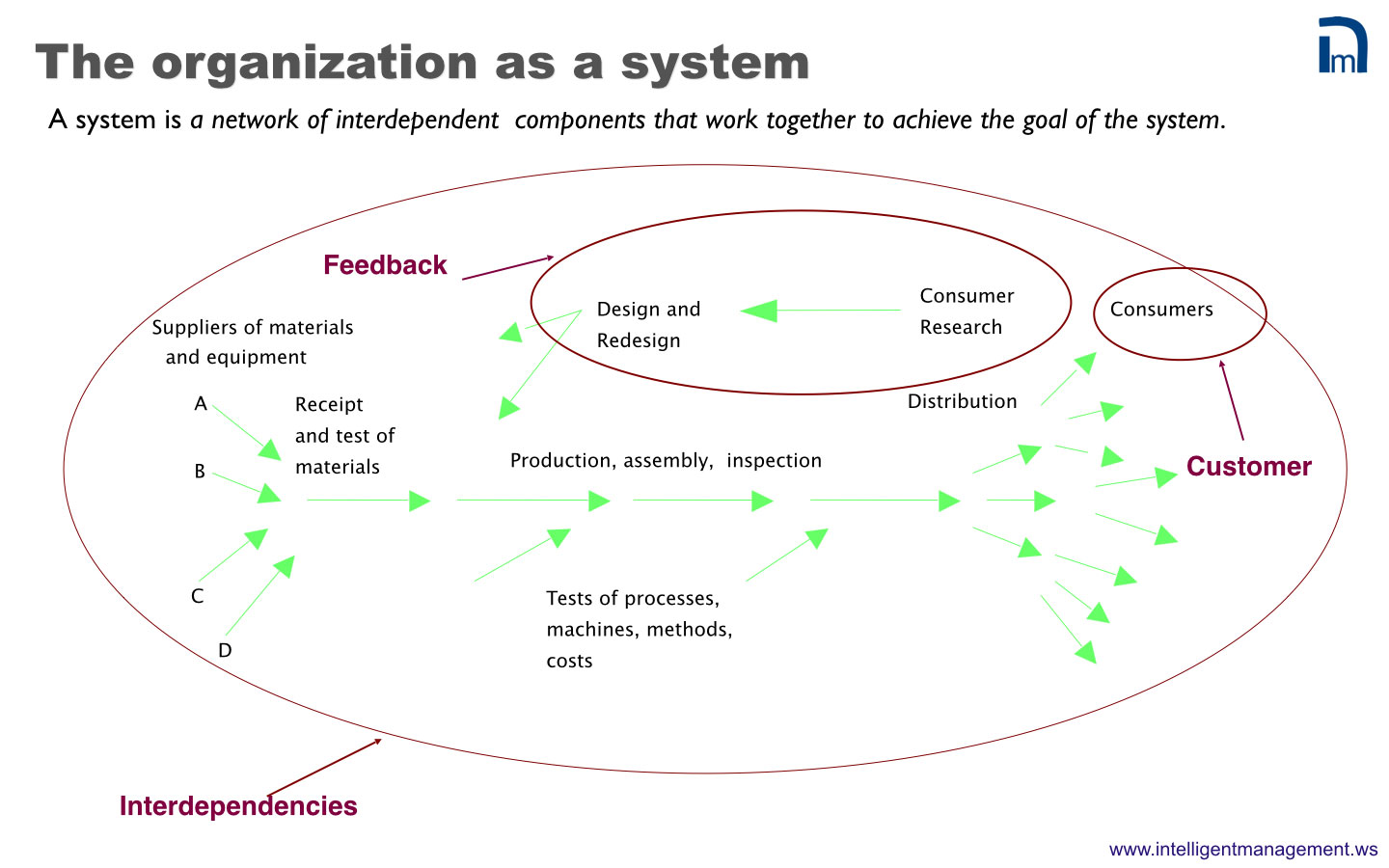
style. What he had in mind is the model created by W. Edwards Deming that transforms
the vision of an organization from hierarchy and functions to a system, where everything is interconnected, and where all the interdependencies are made clear, including those outside of the system.
“What is a system? A system is a network of interdependent components that work
together to try to accomplish the aim of the system. A system must have an aim. Without an
aim, there is no system. The aim of the system must be clear to everyone in the system. The
aim must include plans for the future. The aim is a value judgment.”
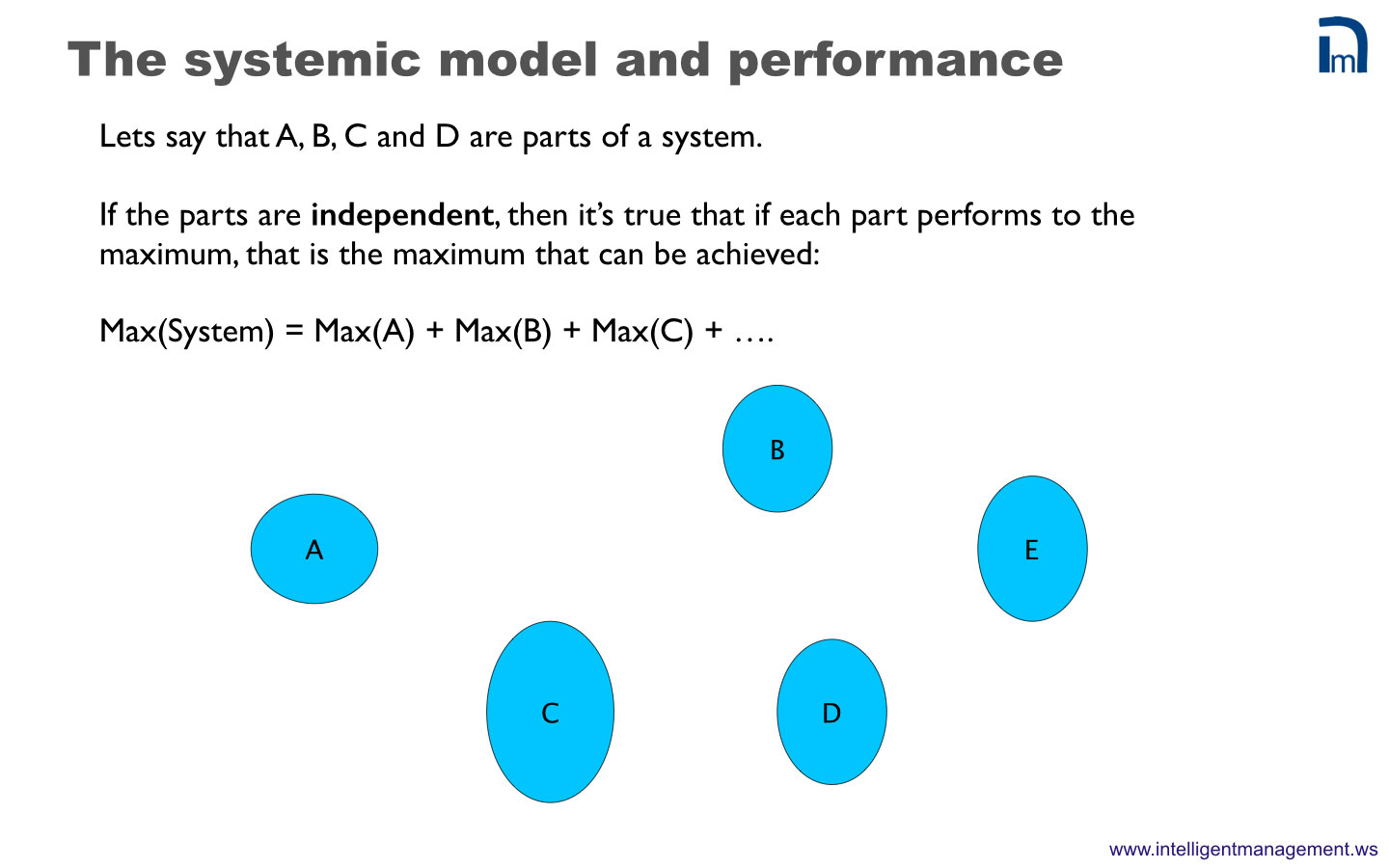
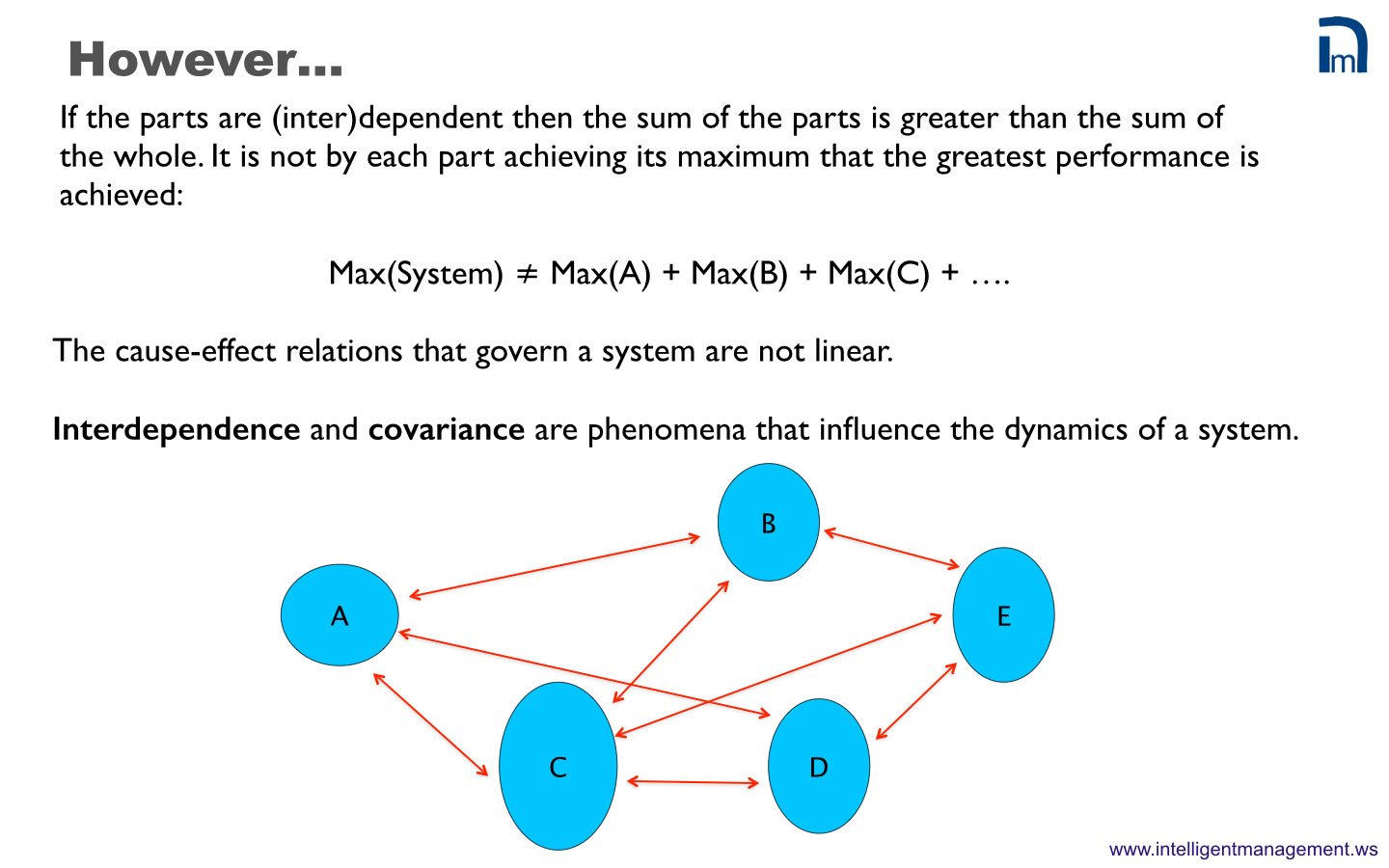
When Nick scribbles on the board, “A + B + C are independent factors, whereas (AB)
+ (AC) + (AD) show interactions. So, maximizing the independent performance of A or B
or C is not going to produce the maximum for the whole system…” he is trying to explain to May that in an organization where people are interdependent (most organizations), it makes no sense for each person to try and achieve their maximum, because the maximum comes from the interaction of all the components that make up the system.
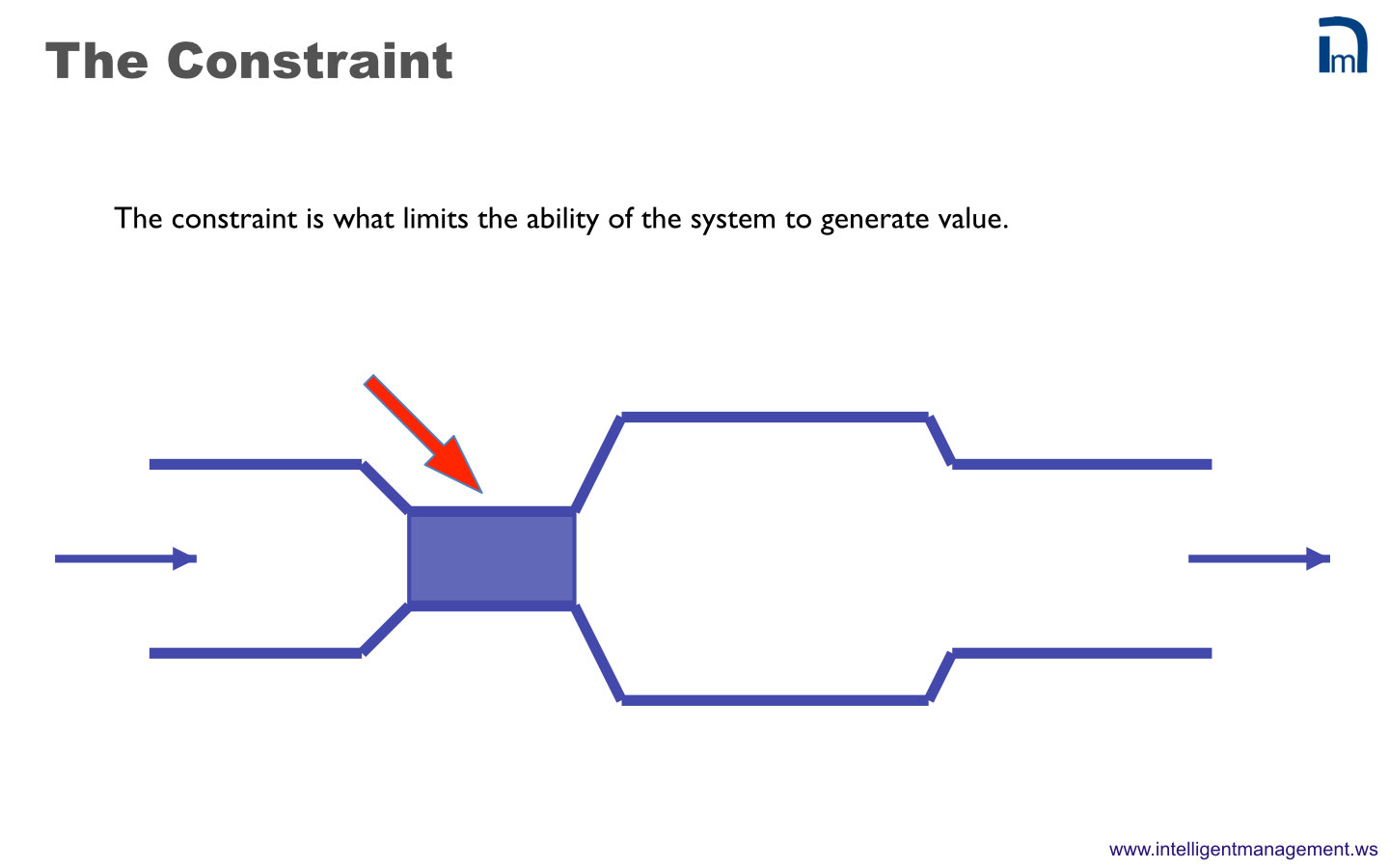
Nick explains to May that most organizations don’t see the whole picture. They
don’t see that every organization has a constraint, like the weakest link in chain, and the entire organization can only perform to the extent that the constraint performs. Trying to optimize every link in the chain is a waste of energy. The Theory of Constraints
demonstrates that an organization can leverage its constraint to govern complexity and
achieve the maximum.
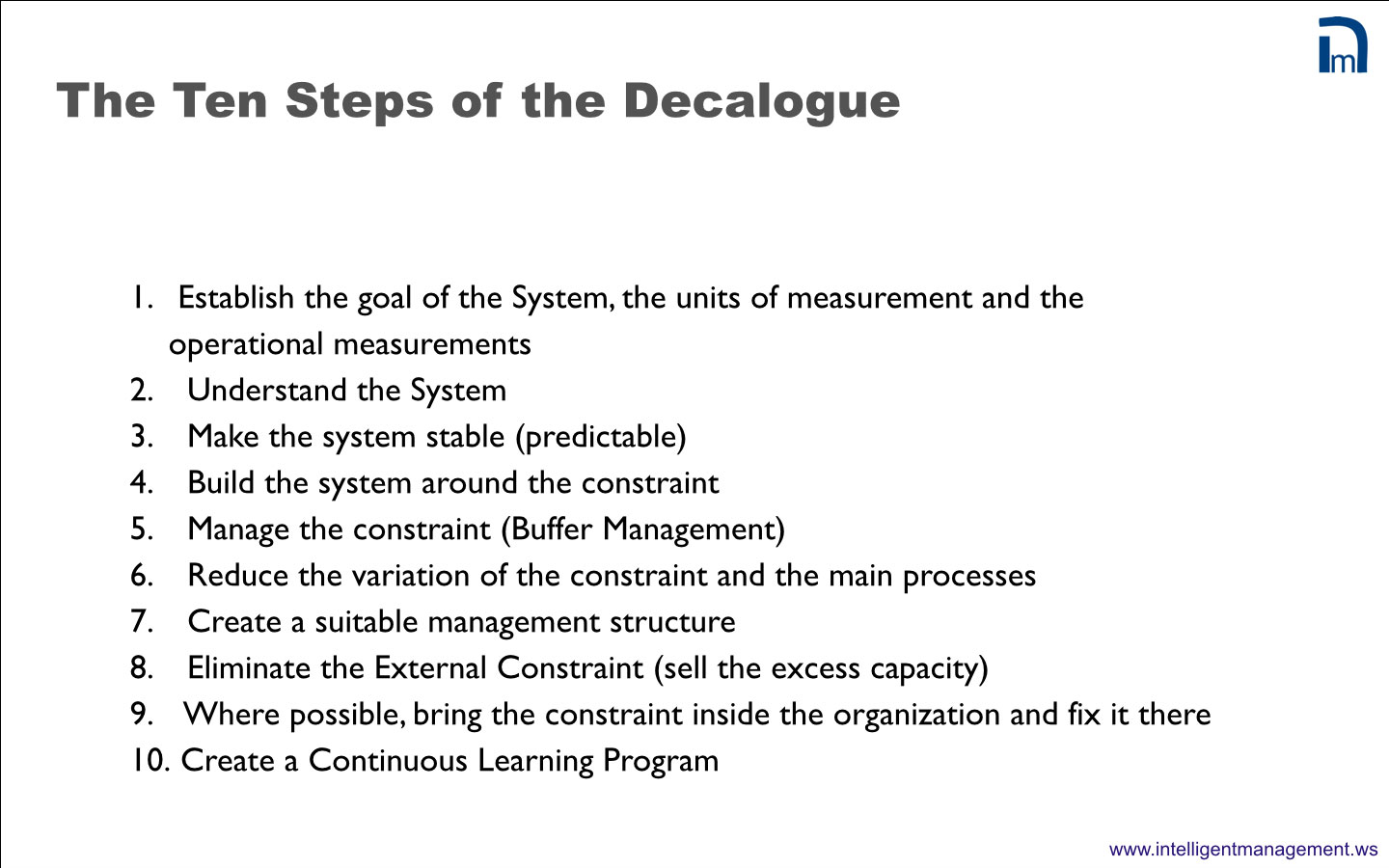
May learns from Nick that TPK Holdings uses a ten step process to manage
organizations. This allowed them to transition from an inefficient and mechanistic model that was suitable for 19th century industries (and where energies are wasted trying to optimize individual parts) to a systemic model where the interdependencies are clear and can be managed to allow a system to perform to its maximum.