May’s words about being slaves in the mind lingered in Sam’s head as Nick, Lucas and several other managers came into the room, ready to start hashing out together how to deal with their suppliers, the mills. He knew nothing about Passover, but what he did know was that every day people succumbed to being trapped, to being slaves to their way of seeing things. As far as he knew, there was only one way out, and that was to challenge the assumptions and mental models. That was what lead to breakthrough, opening up new solutions. They had a tool for that and every time they used it well they inched forward to a little more freedom. Now they needed to use it to tackle the mills.
Building a Core Conflict Cloud
The tool which Sam, Nick and the team use to tackle the problem of dealing with the mills is the Core Conflict Cloud. Why do they use that tool and why is it so powerful?
From childhood, we are immersed in a field of forces that shapes the two basic needs that all of us have; the need for control (over ourselves) and the need for vision (of ourselves). These two needs reflect the dual nature that only humans have of physical and spiritual being. While the spiritual, transcendent part of our self knows no boundaries and aims high; the physical part knows and undergoes fears. Invariably, the simultaneous satisfaction of these two needs will prompt us into a situation of conflict. This time though, the conflict will not be between two people wanting different things and neither will it be a dilemma between two equally desirable wants. The conflict originated by these two needs, for individuals as well as for organizations, will be between something that we strongly desire (and we do not seem to be able to access) and a highly undesirable situation that is the result of how our fears force us to cope with the need for control. This kind of conflict is called “core conflict cloud”. It is a powerful Thinking Process Tool from the Theory of Constraints.
Why Do We Build a Core Conflict?
The exercise of building a Core Conflict Cloud for an organization is invaluable and the process can be exhilarating. Let me try and give you a sense of this. In the last 15 years we have worked with hundreds of top and middle managers to build custom made implementations of the Decalogue and the starting point has always been the writing of the core conflict. A group of managers sits for two-three days in a room starting with a “bitching and moaning” session where all their Undesirable Effects (UDEs )are verbalized. This first phase is a very “feel good” one, everybody agrees that the company is plagued by these effects. These effects are and feel “real” and everybody would like to get rid of them.
Summarizing all the UDEs in one single statement is normally a little cumbersome but it is generally done in few hours. This is the starting point the procedure I list below and the end result is normally welcomed as a breakthrough. What happened?
The Conflict Cloud helps to sharpen our intuition. The group of managers in just a few days has moved from an often disparate set of non-verbalized hunches to a clear cut picture of the forces that keep them from achieving their goal. Moreover, a precise description of the needs that craft the psyche of the organization goes a long way in helping to understand the “why” we are trapped in this conflict, the reason for it. I can safely say that no top management strategic retreat session delivers a tangible and operational output like this one. Now that the intuition is strong we can make it stronger.
How to Build the Core Conflict
The conventional way of building a core conflict cloud is to start from the elements of our reality that we perceive as undesirable; historically they are named Undesirable Effects (UDEs). If we go down this route, then the procedure is the following:
One: we collect all the Undesirable Effects (UDEs)
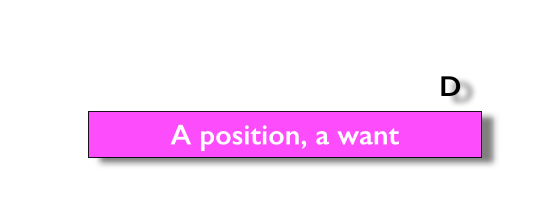
Two: we find a verbalization that summarizes them all, we call it D. (We may want to do this in steps: a) we stratify the UDEs in homogeneous categories; b) we summarize each category with one statement; c) we consolidate these statements into one);
akademischer ghostwriter
ghostwriting agentur
Three: we find a verbalization that summarizes all the Desirable Effects (DEs), we would like to experience, we call it D’
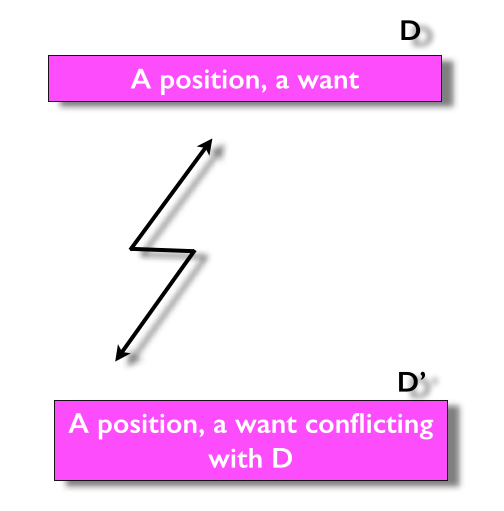
Four: we state the need for “control” that forces us to accept, to cope with D; we call it B
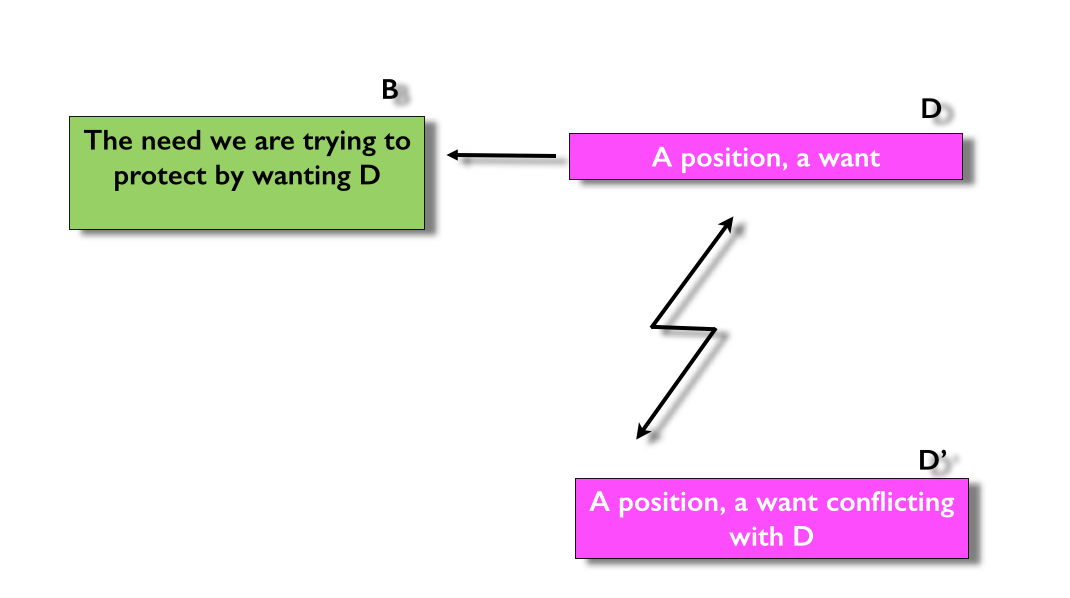
Five: we state the need for “vision” that prompts us to say that D’ is the reality we would like to live in; we call it C
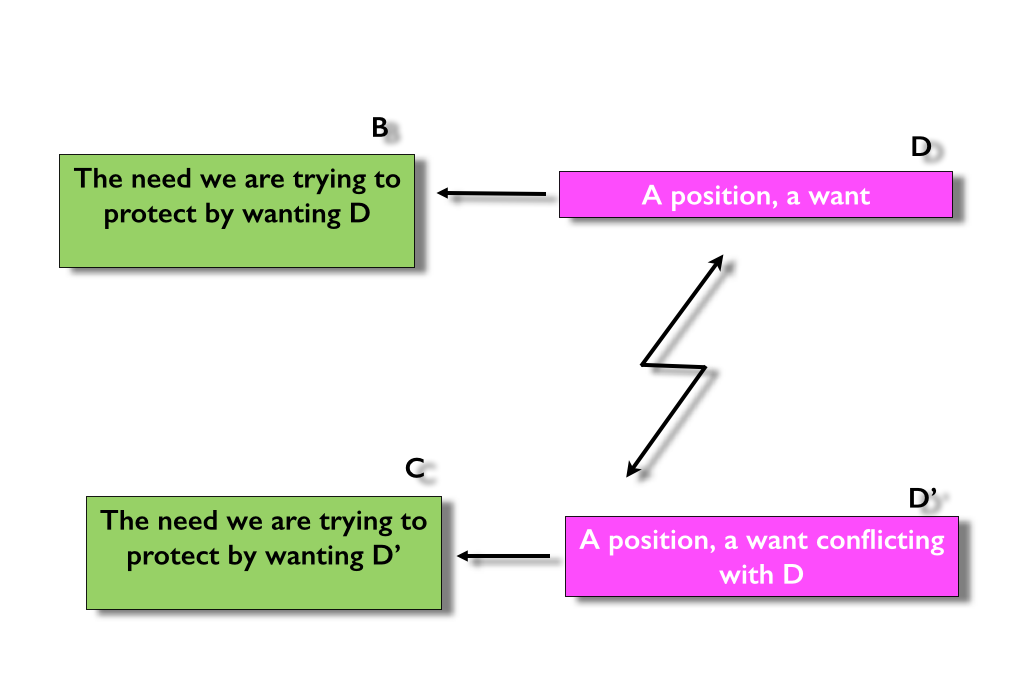 Six: we verbalize the most basic goal whose achievement must pass through the simultaneous satisfaction of B and C; we call it A. In other words, B and C must be simultaneously satisfied in order to achieve A.
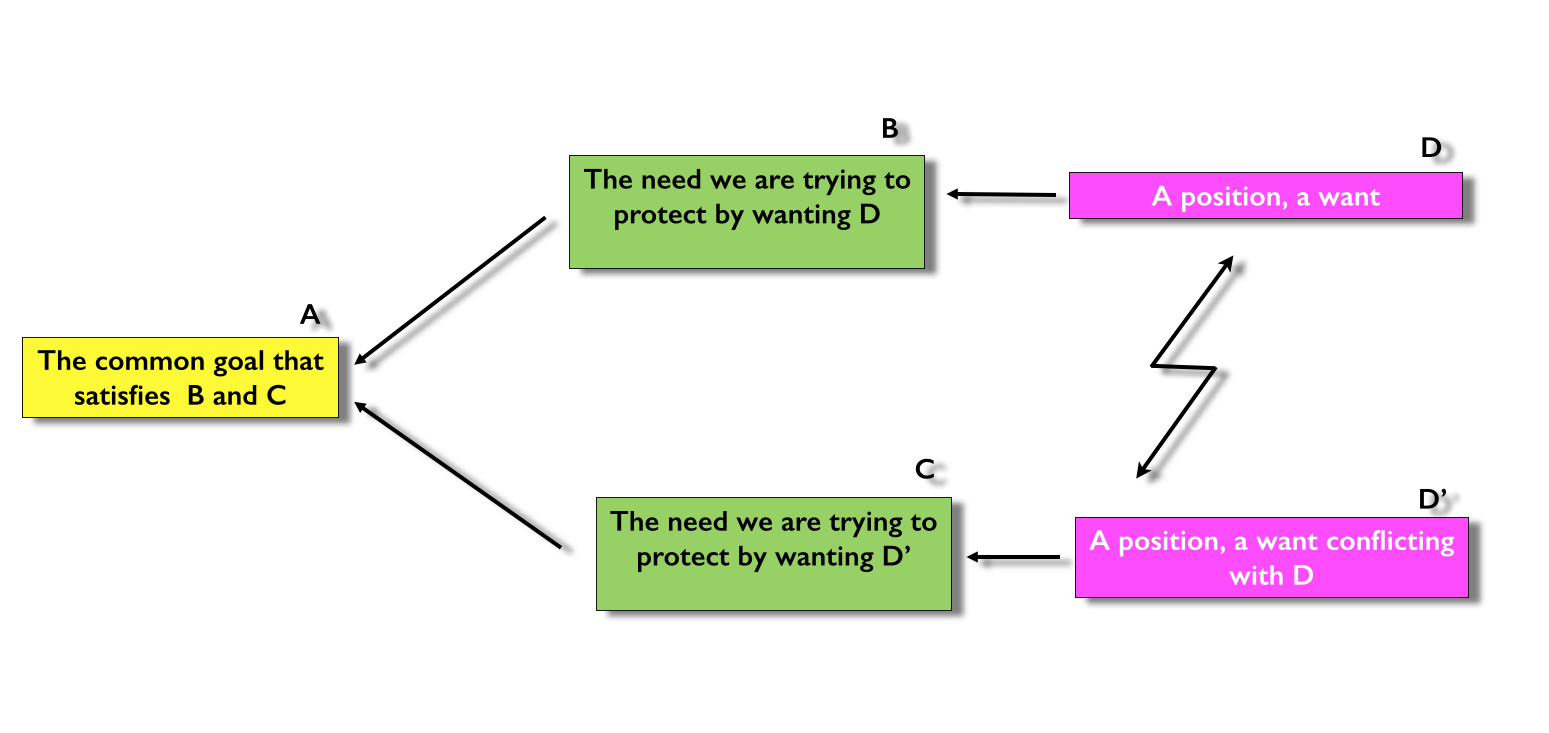
What transforms a core conflict into a full-blown picture of our current reality is a disciplined, orderly elucidation of all the mental models that give birth to the conflict. These mental models are deeply rooted images that we have of ourselves and the world around us. These mental models, which we may also call “assumptions”, are the cognitive lenses through which we perceive reality.
Mental Models
Assumptions are, like any other mental construction, the result of external (the environment, education, experiences, values, etc.) and internal (the chemistry and physics of our mind) factors. The difference between an assumption and a statement of reality is only the realm of validity, determined often by cultural circumstances. (If you want a practical example of this last statement, take a sentence like “in a democracy every citizen is entitled to decent, affordable and reliable healthcare” and ask for a comment from a statistically representative sample of individuals in the US, Canada, and Europe).
Assumptions are the logical connectors between goal, needs and wants; they help us see the logic that shapes the conflict. A conflict with its set of clearly verbalized assumptions portrays the current reality precisely in the way we experience it and is the strongest possible support we can provide to our intuition.
The Core Conflict of the Mills
Here is the Core Conflict for the Mills that Sam, Nick and the team built in Chapter 18.
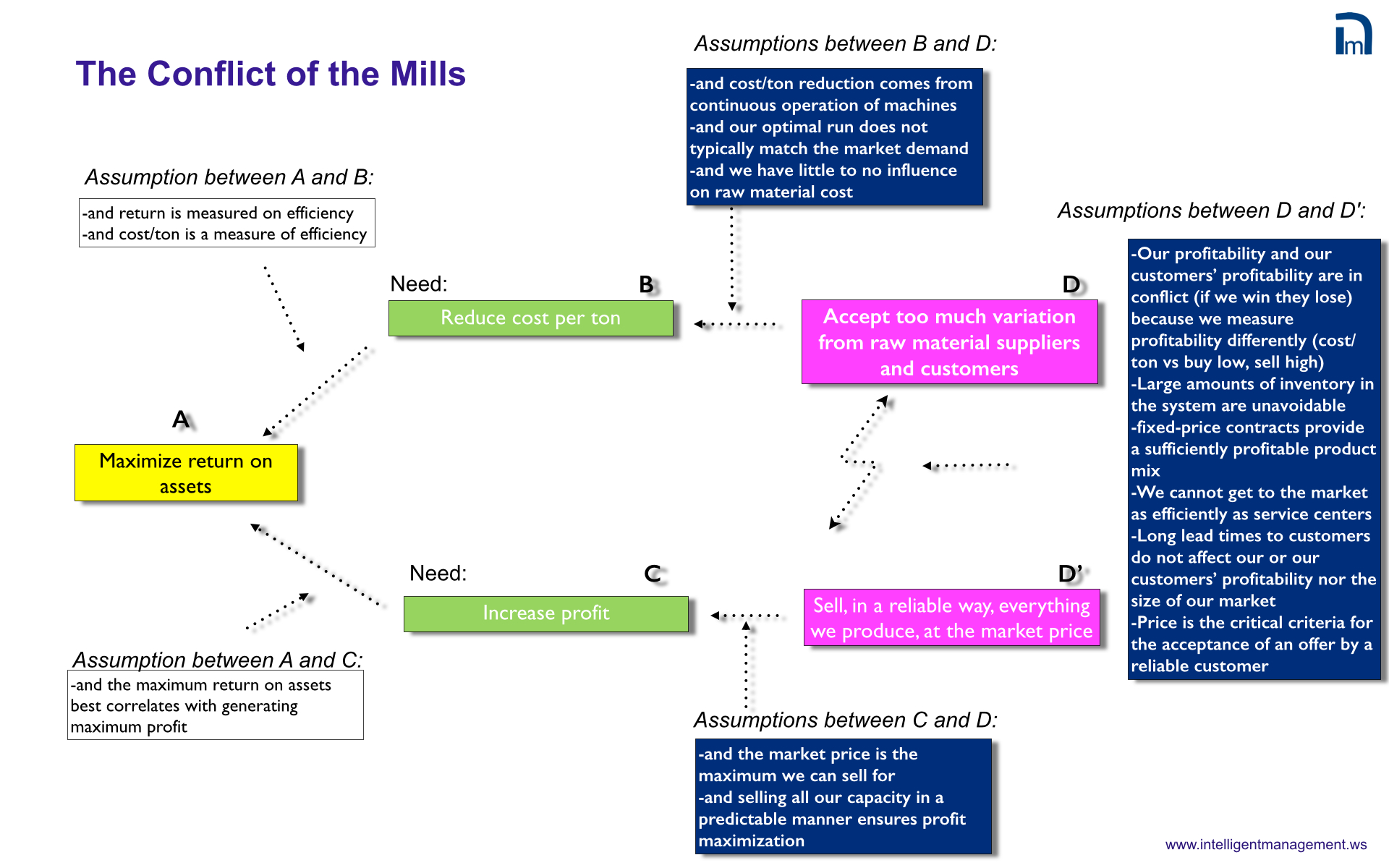
In this animated version of the Core Conflict Cloud, you can see the cloud unfold in the way the cloud is read once it is built, moving from left to right, starting with the goal.
Generic mill conflict animated from Angela Montgomery on Vimeo.